

It is good to be a great writer; it remains more important to be an honest man.1
— F.L. Lucas
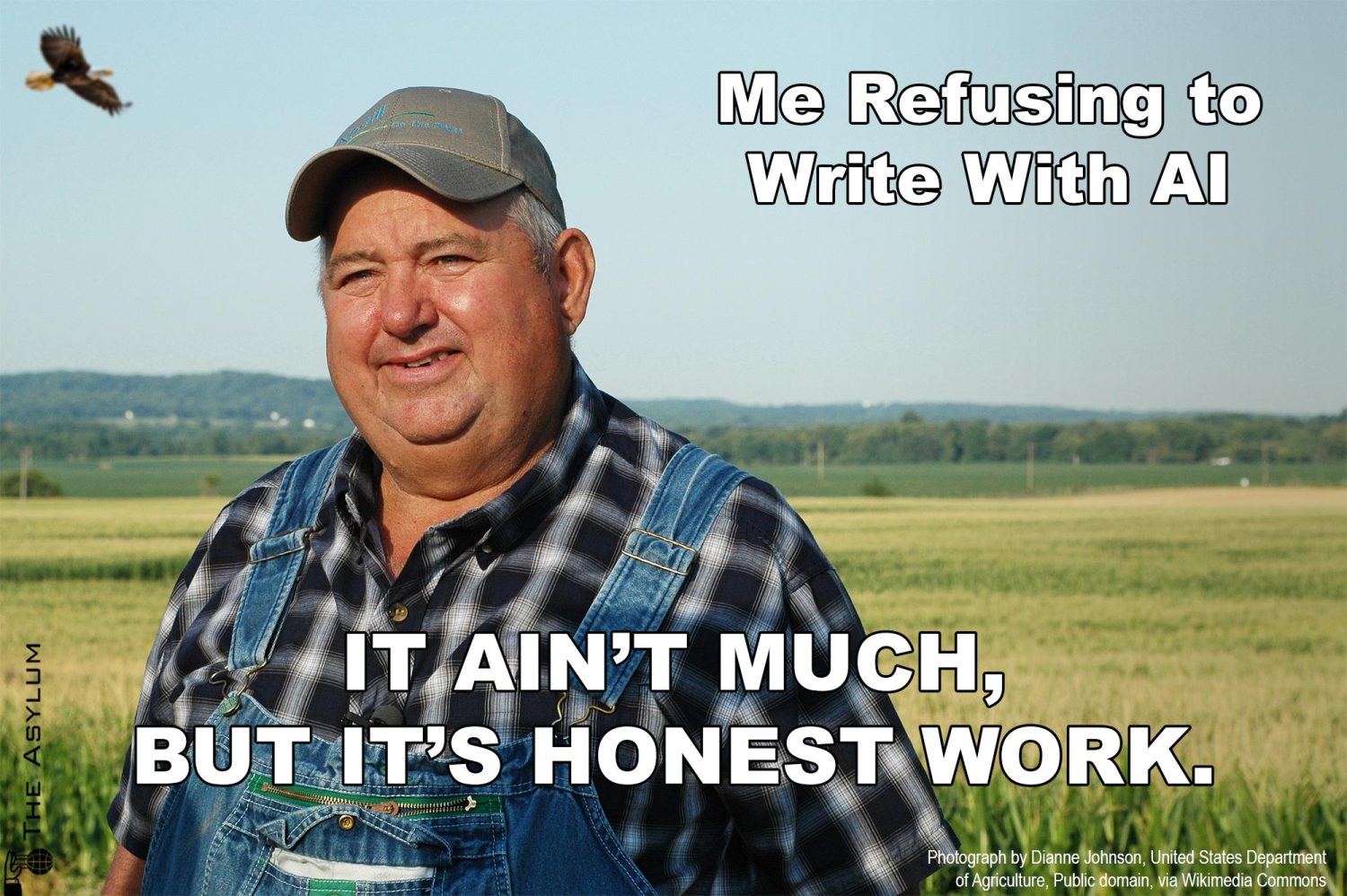
I’m writing this essay not because I think I’m a great writer or that I have a monumental contribution to make to the art of writing. There are far more qualified writers on Substack and elsewhere to write a piece like this. I’m writing it because over the last few months I have been thinking more and more about AI and those who use it to write. I wrote four pieces about it here (about the AI writer, A.C. Rosenthal), here (about AI writers in general), here (a satiric piece) and here (about AI humanizers) and have engaged with a couple of writers who use AI to write their essays—not just for research, but literally prompting the AI to write their essays (they argue it’s way harder than you think).
AI writing is proliferating for propaganda, to convince us to accept its use as normal, to make money and to feign intellect and ability. But I also suspect that people are using it because they found out writing is hard and may think they don’t have the talent to become a decent writer or at least an acceptable one. I consider myself proof that someone with little natural talent for writing can learn the craft well enough to write some good pieces and enjoy a satisfying and meaningful journey in the process.
If you’d prefer to use AI, go for it. But don’t apologize, or get defensive or try to hide it when confronted. Stop with the rationalizations and the excuses. Put a message under your title to let people know an AI wrote your piece: I used AI to write this or An AI wrote this. I doubt you’ll lose many readers—most will not care. So be honest about it and keep perfecting those AI friendly prompts.
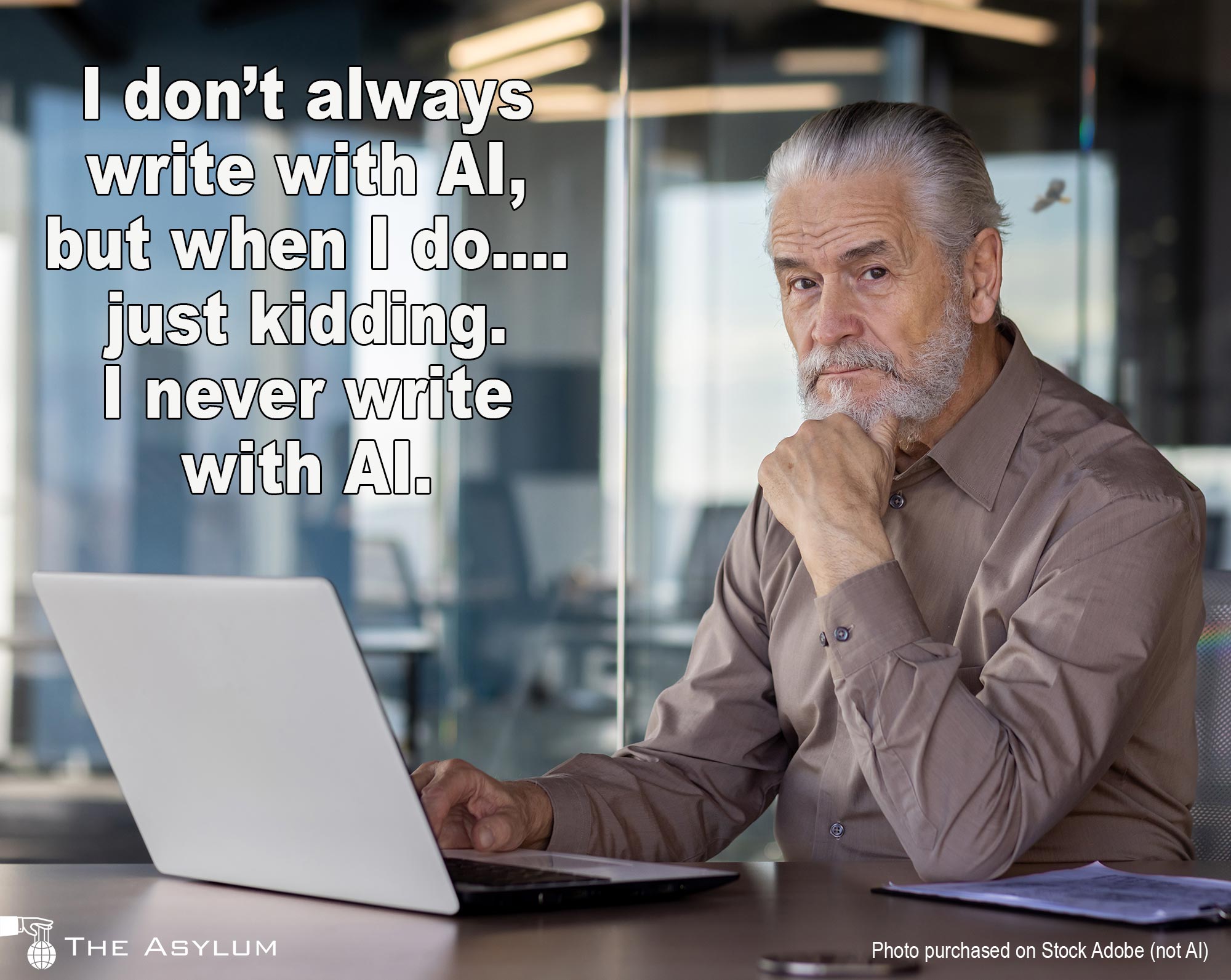
For the rest of you who are interested in writing without AI I hope my writing journey, advice and the advice of those I quote will help you become a better writer and, more importantly, a better person.
My Journey
If you can remember to pursue clarity, brevity, and courtesy to readers; to be, if not gay, at least good-humored; never to write a line without considering whether it is really true, whether you have not exaggerated your statement, or its evidence; to shun dead images, and cherish living ones; and to revise unremittingly—then, though you may not, even so, write well, you are likely at least to write less badly. — F.L. Lucas2[emphasis mine]
Writing is a skill I acquired because I wanted to write, not because I had a natural talent for it. I didn’t. My undergraduate degree is in Physical Education. I started writing seriously in my mid-twenties. Not exactly sure why it became such a passion, maybe it was reading The Chronicles of Narnia by C.S. Lewis, the The Sea Wolf by Jack London or other books, but I decided I wanted to make my living writing—something that never happened. After finishing a few short stories on my electric typewriter I thought I was pretty damn good.
The truth? I was pretty damn bad. In the mid 80s, for the first time, I brought a short story of mine before a couple of decent writers. I expected accolades and praise, because I was, no doubt, on my way, but the critique from one of the writers was especially harsh—and correct.
From the first sentence to the last she had not one good thing to say about my story. At one point she almost yelled, “No crying!” referring to an incident in my tale. My writing was terrible: filled with cliches, passive voice, contrived situations, bad sentence construction and the plot was juvenile. I felt embarrassed, humiliated, depressed and drove home wondering why the hell I thought I could write and why the hell did I want to?
But I wanted to. And I wanted to learn to write well or at least better.
And how is clarity to be acquired? Mainly by taking trouble; and by writing to serve people rather than to impress them. Most obscurity, I suspect, comes not so much from incompetence as from ambition—the ambition to be admired for depth of sense, or pomp of sound, or wealth of ornament. — F.L. Lucas3
I resolved to read as many great writers as I could and expose myself to great ideas, novels, stories and poetry. I believed reading the great novelists, essayists, poets, playwrights and philosophers would influence my writing even if I couldn’t consciously explain how. I also decided I needed to read about how to write well and I knew I needed to keep writing consistently, no matter what it was.
What this means, in practical terms for the student writer, is that in order to achieve mastery he must read widely and deeply and must write not just carefully but continually, thoughtfully assessing and reassessing what he writes, because practice, for the writer as for the concert pianist, is the heart of the matter. — John Gardner4
During the next 20 years I wrote short stories, essays, book reviews, research papers in a graduate program, poetry, a fantasy novel, an underground paper where I worked, started a science fiction novel and wrote letters to my friends and my future wife. My output was immense and slowly, very slowly, my writing improved.
In the early 90s I started a graduate program in Literature and Creative Writing at San Diego State University. It was terrifying. My short stories made no impact in that first writing class until my last one. That was the first time my writing had ever been praised. I wanted to get an advanced degree (Master of Fine Arts) and teach, but my wife’s ongoing illness prevented those plans and I had to drop out.
However, I kept writing and a few years later I had a personal story published in the San Diego Reader and the City Paper in Baltimore, the first and only times I’ve ever been paid for my work. After that I had a book review published in a German magazine for which I received complimentary copies.
A lot of writing is too confused and obscure; a lot is too wordy; a lot is too peevish or pompous or pretentious; a lot is too lifeless; a lot is too lazy. These are not hopeless faults to cure oneself of, if only one can remember them. — F.L. Lucas5
I started The Corporate Asylum (the predecessor to The Asylum) around 1997 based on my underground paper, The Inmate, that almost got me fired. During those years I wrote and read an enormous amount about corporate culture and its influence on regular, working people and their families.
Then in 2003 an unexpected thing happened: I got laid off from DHL where I had worked as an overnight delivery driver for over 17 years. Up until that time I had read hundreds of books and spent thousands of hours writing. Overnight that stopped. With a wife and young child I had one goal—I needed another career.
But I must say that my personal preference goes to the type of author who realizes that to have read a lot of books, or even to have written them, is not after all very important; that most of the things we debate so hotly are extremely debatable, and anyway will not matter two straws in fifty years’ time; that since nothing matters ultimately but good states of mind, and the means to them, many an honest artisan or simple housewife gets more from life, and gives more to it, than many a writer of repute; and that it is better to gain the respect of readers than their admiration—better still, it may be, to gain their gratitude. — F.L. Lucas 6
Because I already had a website and enjoyed creating it, I went back to college for a year in 2004 to learn web development. I was forty-six. After a tough, depressing eighteen months trying to get a job, I started my own web company in 2006. From 2003-2020, I read only one novel and stopped writing entirely as my energy was monopolized by learning HTML, CSS, Javascript, MYSQL and PHP while I built dozens and dozens of websites. Stranger still is that I did not miss either reading or writing. I loved programming and building websites, my new business was thriving, and I believed I probably would never write or read much again.
Then came 2020.
I’ve written about this before, but the stolen election in 2020 depressed me. We were losing our country and I felt helpless to do anything about it. But what could I do?
I could build a website.
I could read.
I could write.
That’s when I decided to rebrand The Corporate Asylum to The Asylum and start writing about vaccines, the election and whatever else I considered important. Initially, my main goal was to direct readers to other writers on Substack or to important books, something I still do, but I started writing again in 2021 and haven’t stopped.
Writing “Less Badly”
There’s nothing below that hasn’t been said or written by many other writers. The work required to become a better writer isn’t complicated—the difficulty is doing it.
An Essential
Writing, like programming and many other things pursued in life, is something you should passionately want to do. Becoming a good writer or even just a tolerable one, requires time and dedication. It can be tedious even if you love it and often there’s not much payback for what you write. That is, no praise, no notoriety and not much money—if any. Most writers don’t make a living writing. Be sure you truly want to write.
Read
It rarely happens, if it happens at all, that a writer can achieve effects much larger than the effects achieved in books he has read and admired. — John Gardner7
Read what you like, but include a healthy percentage of the classics. Why? Because they have lasted. They’ve proven themselves over decades, centuries or millennia. If you have trouble reading the classics, start small. Read some short stories first. Find some accessible poetry. Like wine or IPAs the classics can be, and often are, an acquired taste.
Read Shakespeare. He’s hard to read if you’ve never read him. Reading a synopsis of the play you plan to read, especially if you’re a virgin Shakespeare reader, will help. Try Tales from Shakespeare by Charles and Mary Lamb available for free on Project Gutenberg. Becoming comfortable reading Shakespeare’s plays and poetry is worth the effort.
We are not profoundly moved by Homer, Shakespeare, or Melville because we would like to believe the metaphysical assumptions their fictions embody—an orderly universe that imposes moral responsibility—but because we do believe those assumptions. — John Gardner8
Read the Bible—even if you’re not a Christian or never think you’ll become one. There are so many references to the Bible throughout classic literature and Western culture that it is good to be familiar with it. It’s full of wisdom, great stories, triumph, failure, poetry, proverbs and the life of Christ. It is one of the great foundations of Western Civilization.
The Bible—but all the Bible—and Homer, and Shakespeare: these are the supreme old novels. These are all things to all men. Which means that in their wholeness they affect the whole man alive, which is the man himself, beyond any part of him. — D.H. Lawrence9
Write
The hardest part of writing is to write: thinking is much easier. — George Watson10
Write consistently. Write a lot. It sounds easy. It may be for some, but in the beginning it wasn’t for me. You have to write. There are no shortcuts. If you’re passionate about it, you’ll be able to push through and discipline yourself to survive the rough times, if you can’t, do something else.
I don’t write that last phrase as a judgement or criticism. I simply mean, don’t waste your time on something you don’t truly want to do. Find the thing that engages you. There’s nothing inherently moral or special about being a writer or an “artist.” I hate when people talk that way about any profession whether it’s being a missionary, a nurse, a teacher or some other “noble” endeavor. Having a particular profession or passion doesn’t make you virtuous, being virtuous makes you virtuous.
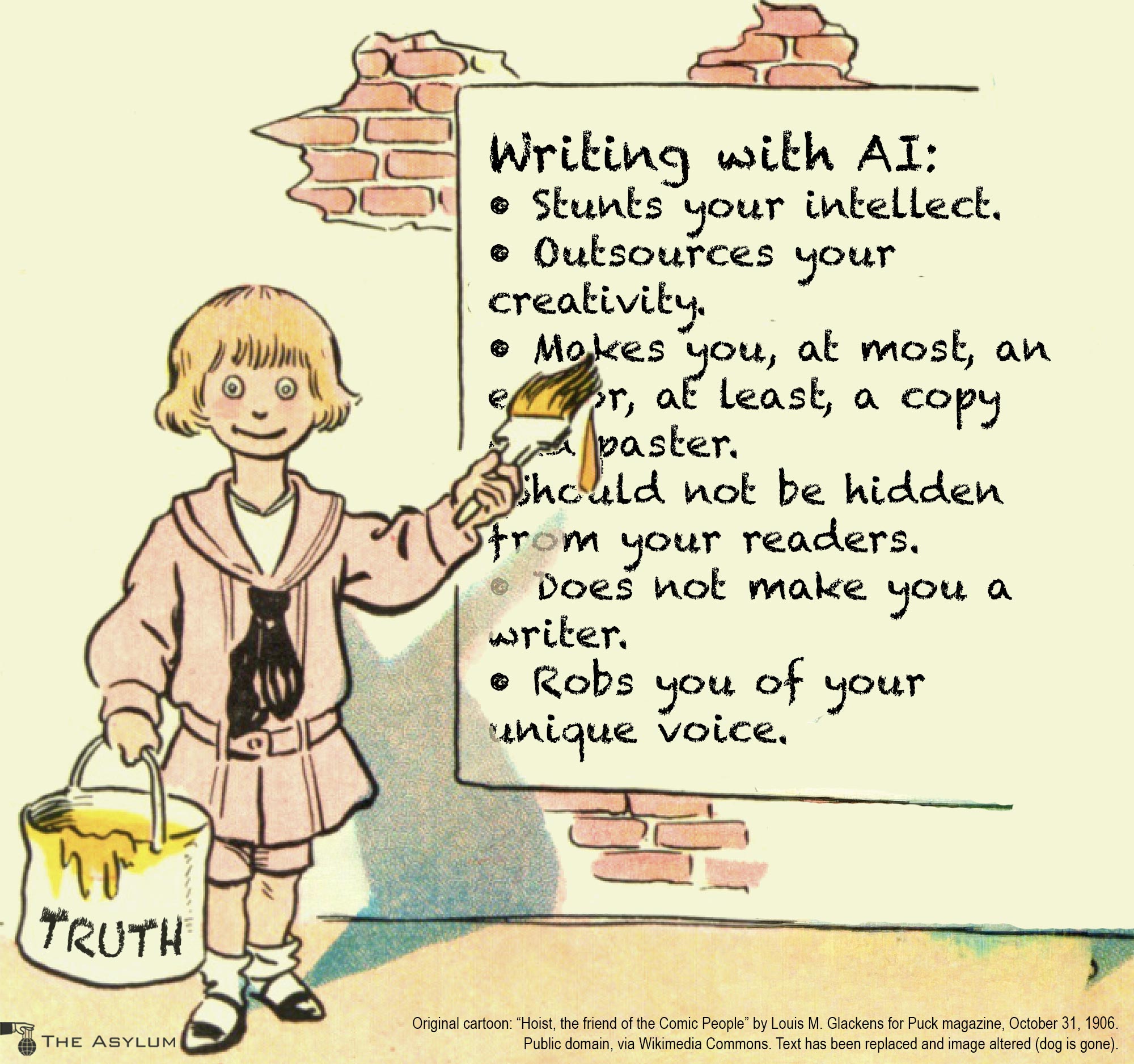
Don’t use AI to write. Resorting to AI will stunt your intellect and creativity. Using it will rob you of your voice and your uniqueness. Better to be a bad writer on your own, than to think you’re a good writer because the AI wrote something you asked it to. That’s not writing, it’s managing a machine—that may someday manage you.
Read About Writing
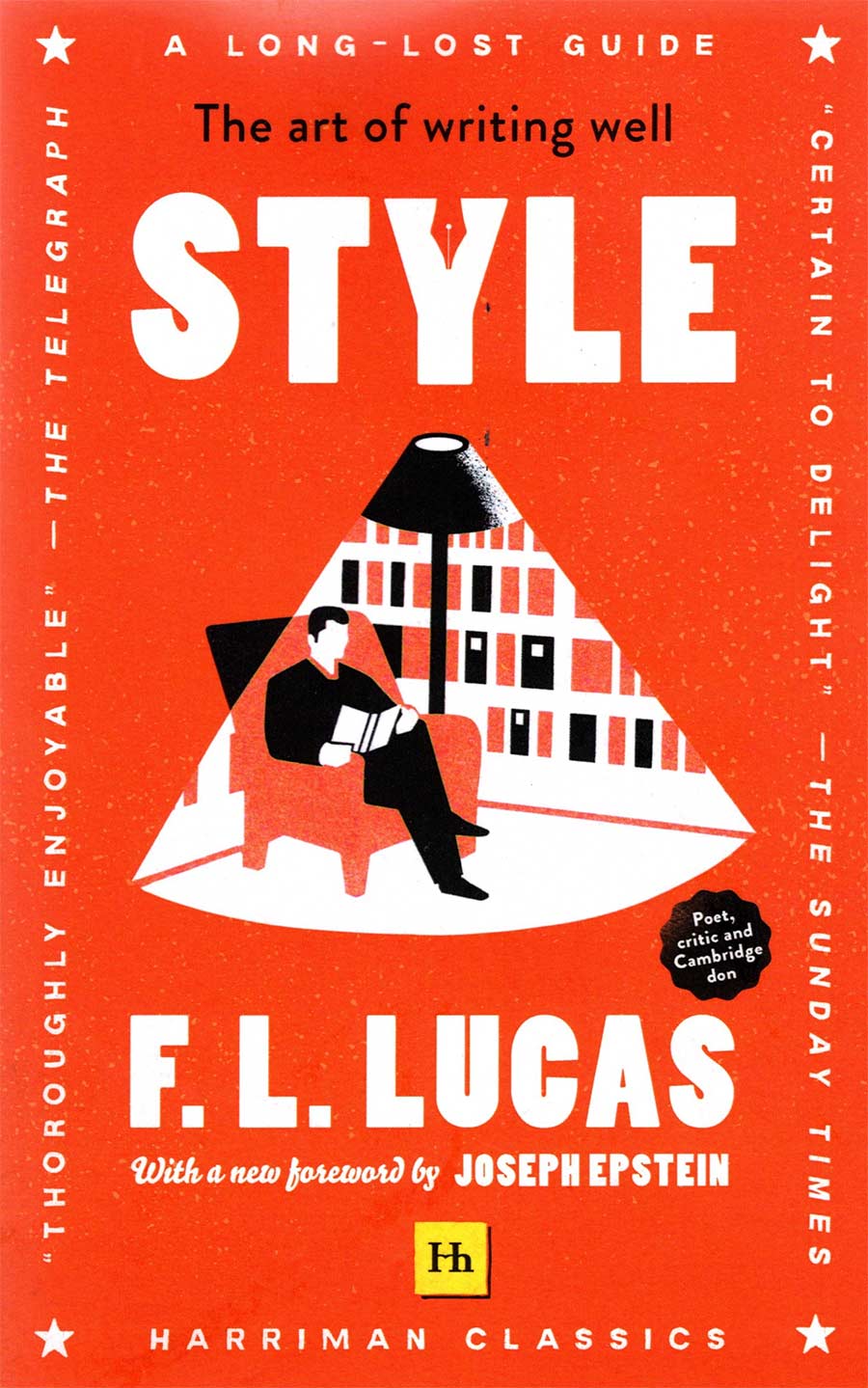 The quotes in this piece are from several books I like about writing, but by far Style by F.L. Lucas, is my favorite. Style has everything: it’s practical and philosophical. It will inspire you to be a better writer, a better person and can help you write “less badly,” which may be the only realistic goal for most of us.
Edit, Rewrite, Edit, Rewrite, Edit
Writing is hard. It sometimes seems even harder than it is, because one can easily forget it is not a single process. Those who say they cannot write, and give up too soon, usually mean they cannot write good prose in a single process. They badly need to be told that hardly anybody can. — George Watson11
I can’t remember the famous author’s name who told about his wife finding and reading a first draft of one of his short stories. She said to him, “This is high school stuff!” He responded something like, “Of course it is! It’s only my first draft!”12
I don’t keep track of how many times I’ve reread and edited the essays, book reviews, fiction and other pieces I post on Substack, but it’s easily a dozen or more for each one. Very short pieces that I’m trying to get out because of some current event in our crazy world, are sometimes less. But even the text in my memes gets edited many, many times.
Self-editing, even for those with real, live, human editors, is a necessary and difficult thing to learn. I’ve read often that the hardest parts to get rid of are the sentences and paragraphs you may be most proud of, but that don’t fit in your story, essay or novel. If you’ve spent a lot of time on a paragraph, but something about it doesn’t work or you begin to feel uneasy about it, it can be difficult to toss it—but you probably should.13
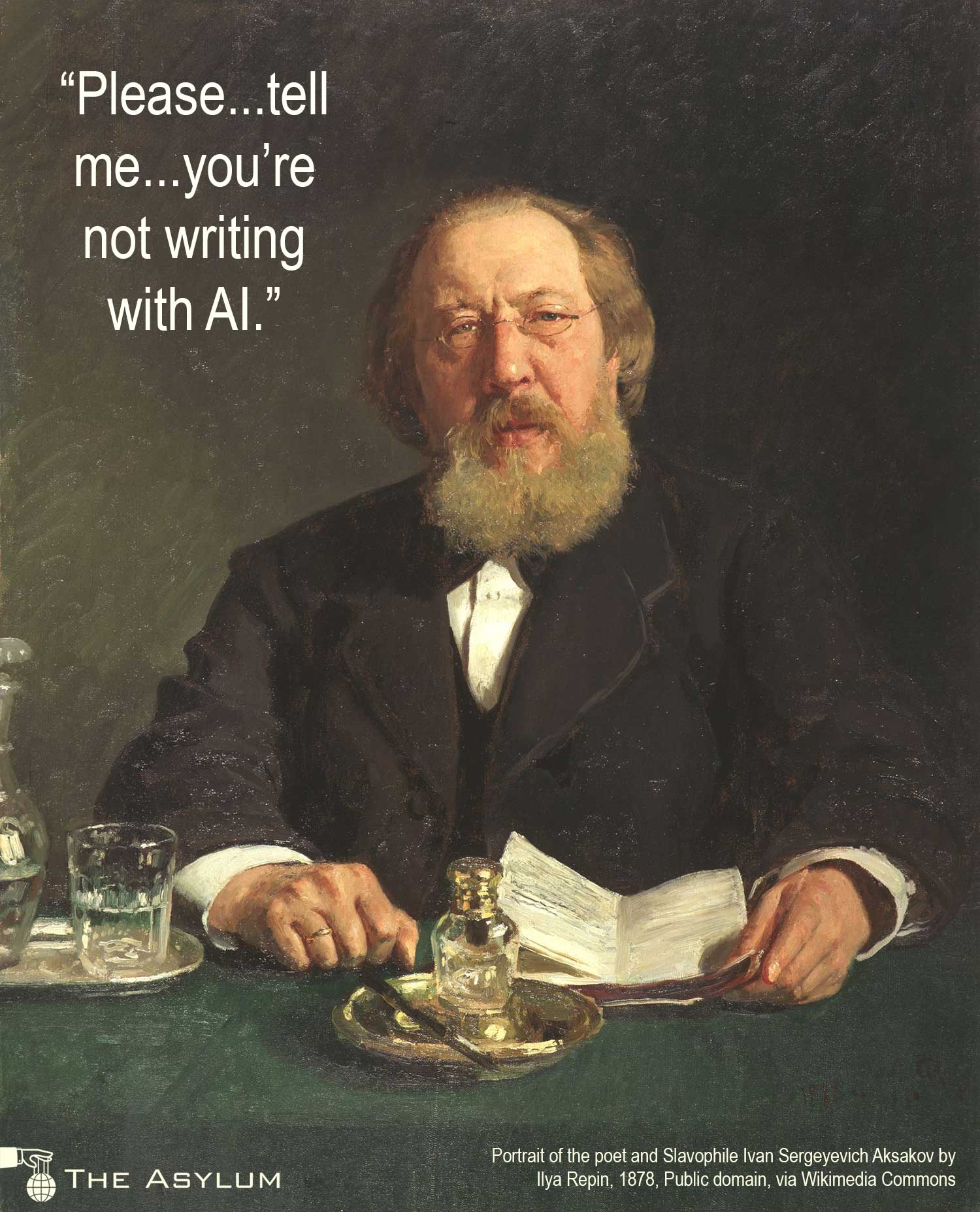
I like to read my pieces out loud once I decide they’re close to being ready. Out loud you hear the words in ways you can’t in your head and often you’ll notice issues: typos, awkward sentences, sentence length repetition, repeated sentence constructions, repetition of words and logic issues.
Rules for writing are good to remember and if you’re a new writer, like any new thing you’re trying to learn, it’s best to follow those rules until you achieve some measure of competence. But after your apprenticeship, do what you want. It should be fun, not drudgery.
Publishing / Posting
At some point you are going to have to put your writing out there for people to read. You don’t have to, I guess, but most of us who write want people to read what we’ve written. Don’t wait until it’s perfect. It’ll never be perfect. You can endlessly rewrite and edit, but there comes a time when you have to say, “To hell with it! Today I post it.”
Once I’ve posted something I always go through and read it where it’s posted. 90% of the time I find typos or small issues. There’s something about reading what readers are going to read, in the format they’re going to read it in, that makes my brain process it differently. I’ve found the same thing to be true with books I’ve self-published, which is why I order a lot of proofs before making a book live.
Some people will not like what you’ve written. Don’t let that discourage you. The reality is most people will not like your writing. They may not like your style or your content or they may think you’re a bad writer or a mediocre one or too depressing or too optimistic. Most people don’t like Jim Gaffigan’s comedy, but enough people do like him that he can make a living as a comedian.
I know it’s easy to say (or write), but don’t worry about how many followers or subscribers you have or whether you’re a good or bad writer. Strive to get better, but let all that other stuff take care of itself. Write what you want. Don’t try to please your audience. Please yourself—an audience will follow—or maybe it won’t. But it’s more important to believe in yourself and to trust yourself, then it is to be a popular writer.
It is unlikely that many of us will be famous, or even remembered. But not less important than the brilliant few that lead a nation or a literature to fresh achievements, are the unknown many whose patient efforts keep the world from running backward; who guard and maintain the ancient values, even if they do not conquer new; whose inconspicuous triumph it is to pass on what they inherited from their fathers, unimpaired and undiminished, to their sons. Enough, for almost all of us, if we can hand on the torch, and not let it down; content to win the affection, if it may be, of a few who know us, and to be forgotten when they in their turn have vanished. The destiny of mankind is not governed wholly by its “stars.” — F.L. Lucas14
Be Fierce
If you start writing on Substack or any platform, write as well as you can. Rewrite and edit for that one person who may be your first reader. I don’t remember where I read this, but it has stuck with me:
Post your best material now. Don’t save it for later.
If you can, find other writers who can help you improve. But ultimately, be yourself. Write what you want to write. Don’t stress about pleasing your readers, or being edgy, or different, or getting “likes” and “views.” The latter two can be fun when something goes viral (enjoy it!), but don’t start writing (or creating memes) in an effort to solely produce something viral.
I distrust frantic resolutions to be ‘original’. I believe that a writer should try, not to be different from others, but to be himself; not to write ‘originally’, but as well as he possibly can. Real originality is spontaneous. — F.L. Lucas15
I hope this will help some of you who, like me, don’t have a natural talent for writing, but who want to write and get better at it. And maybe, just maybe, it will inspire some of you who are writing with AI, to ditch it and cultivate your own style and voice.
Insist on yourself; never imitate. — Ralph Waldo Emerson16
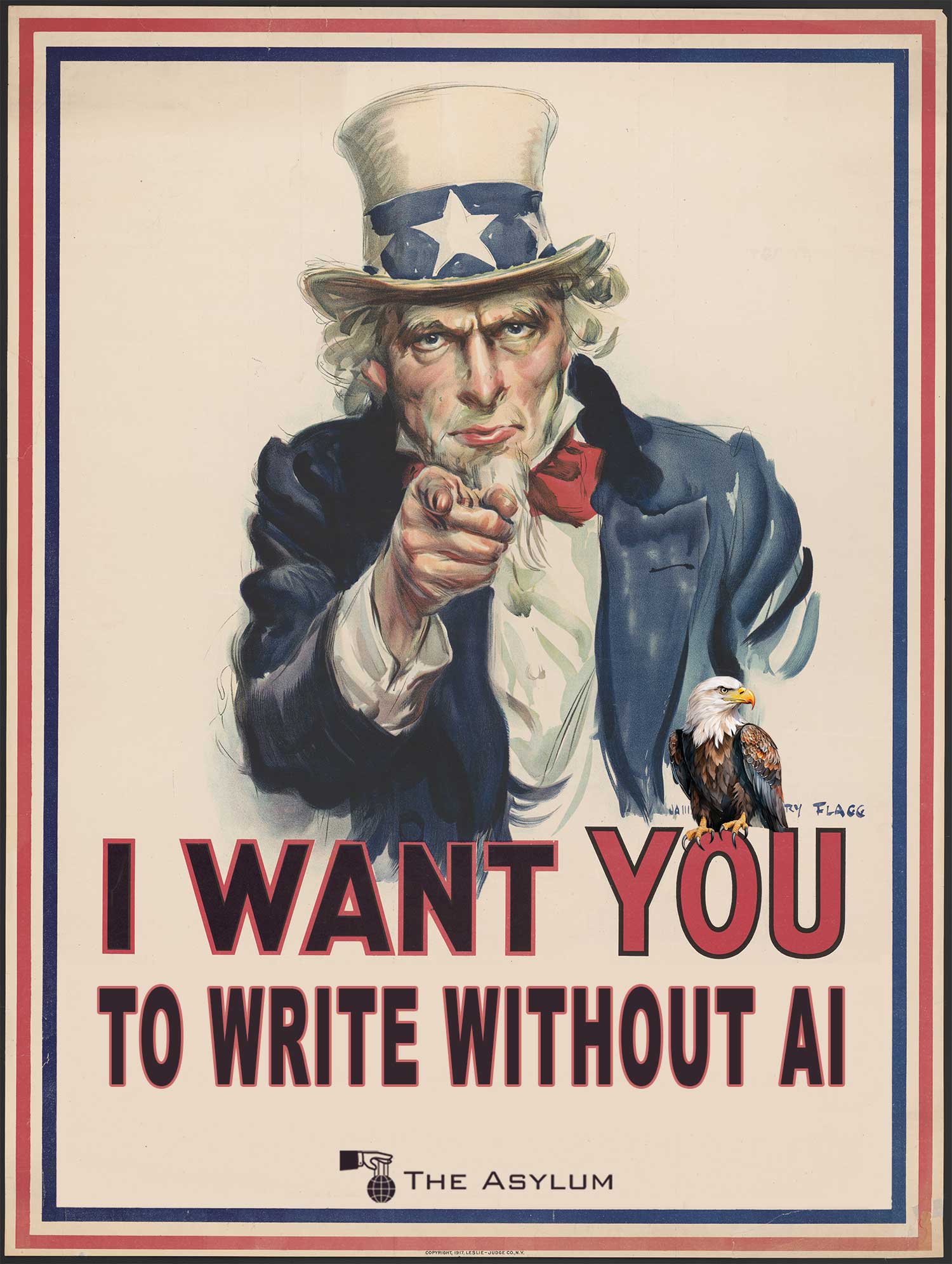
Download Meme
You are free to download and use 
 's meme wherever you want (for non-commercial use only).
Please give credit and link back to the site.
Notes
- Lucas, F.L., Style, Collier Books, New York, N. Y., 1962, p. 271.
- Ibid. 273.
- Ibid. p. 74.
- Gardner, John, The Art of Fiction: Notes on Craft for Young Writers, Alfred A. Knopf, Inc., New York, 1984. p. 9
- Lucas, F.L., Style, p. 73.
- Ibid. p. 111.
- Gardner, John, The Art of Fiction: Notes on Craft for Young Writers, p. 11.
- Ibid. pp. 184-185.
- Lawrence, D. H., "Why the Novel Matters," essay in Study of Thomas Hardy and Other Essays, Ed. Bruce Steele, Cambridge University Press, Cambridge, 1985. p. 196.
- Watson, George, The Discipline of English: A Guide to Critical Theory and Practice, The Macmillan Press LTD, London, 1978. p. 106.
- Ibid. 107.
- After a little research, this story is often attributed to Raymond Chandler and his wife Cissy. I read it decades ago. It may or may not true from what I could find out. The point of it, however, is.
- Not long before publishing this I got rid of three paragraphs that had been in this piece since the first draft. Some of you are thinking, "You should have gotten rid of a lot more." LOL.
- Lucas, F.L., Style, p. 35.
- Ibid. p. 272.
- Emerson, Ralph Waldo, “Self-Reliance,” in Anthology of American Literature: Volume I. Colonial Through Romantic, George McMichael, Richard Adams, et al, editors, Macmillan Publishing Co., Inc., New York, N.Y. 1974. p. 1,335.
 As censorship increases also consider using email and text messages to send links.
Leave a Reply